
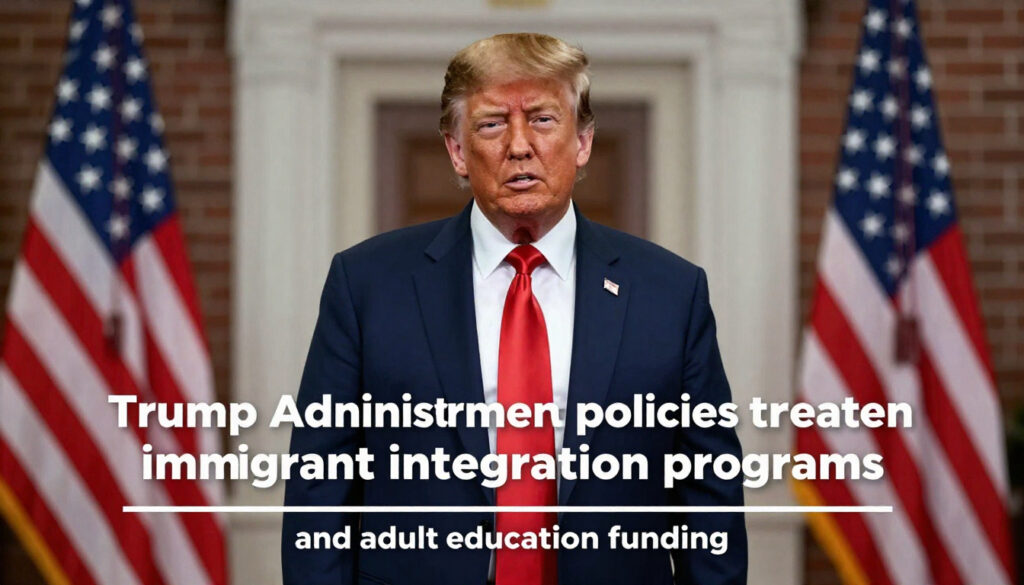
The Trump administration has implemented sweeping policy changes that fundamentally alter access to adult education and career training programs for undocumented immigrants, threatening to reverse decades of progress in immigrant integration and workforce development. These decisions, rooted in an executive order titled “Ending Taxpayer Subsidization of Open Borders,” have sent shockwaves through educational institutions and immigrant communities nationwide.
Restricting Access to Essential Programs
In July 2025, the U.S. Department of Education announced that undocumented immigrants would no longer be eligible for career, technical, or adult education programs funded by federal dollars. This policy shift affects programs under the Carl D. Perkins Career and Technical Education Act and the Adult Education and Family Literacy Act, which have historically served as critical pathways for immigrants seeking to improve their English proficiency, earn credentials, and advance economically.
The administration has reclassified these educational programs as “federal public benefits,” making them subject to immigration status verification requirements. This represents a dramatic departure from longstanding policy that viewed adult education as beneficial to both individuals and the broader economy. The administration is moving these programs away from their educational roots and recasting them as federal public benefits, fundamentally changing how we understand the purpose of adult learning.
The Human Cost
The impact on immigrant communities has been immediate and profound. Six out of ten adult education students are immigrants, making these restrictions particularly devastating for communities that rely on these programs for language acquisition, job training, and economic mobility. Adult education programs serve adults and out-of-school teens 16 and older, offering high school equivalency diplomas, literacy instruction, and vocational training that helps participants secure better-paying jobs and contribute more fully to their communities.
Beyond adult education, the administration has also restricted access to Head Start early childhood programs and dual enrollment opportunities for high school students seeking college credit. These multi-pronged restrictions create barriers at every educational level, from preschool through postsecondary training.