
A troubling trend is emerging across American college campuses: Generation Z students are arriving unable to comprehend basic written text. Professors nationwide are sounding the alarm about a literacy crisis that’s forcing universities to dramatically lower academic standards and rethink how they teach.
The Harsh Reality in College Classrooms
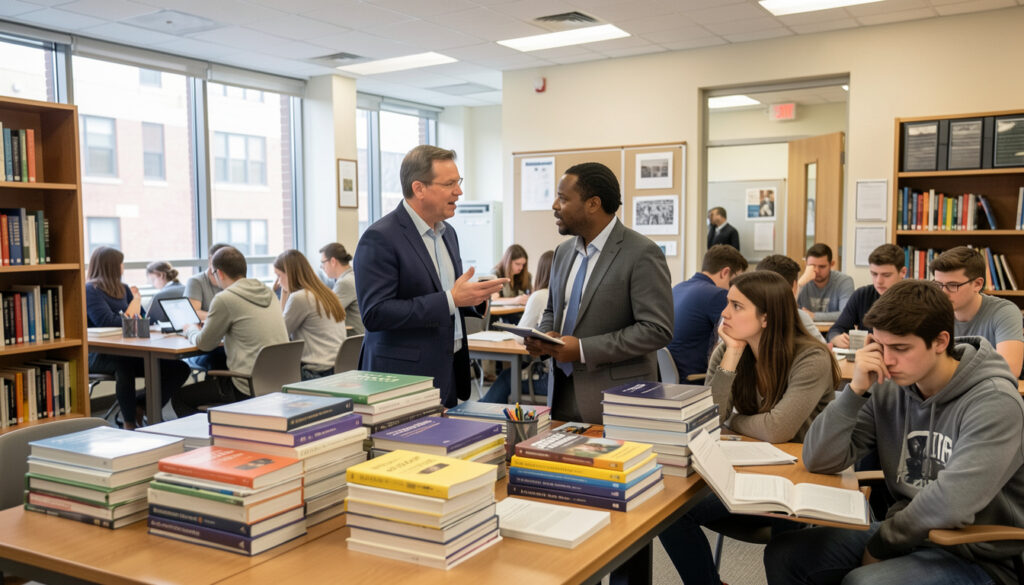
Pepperdine University literature professor Jessica Hooten Wilson describes the situation bluntly. Students today struggle with fundamental reading comprehension—not analyzing complex themes or debating philosophical concepts, but simply understanding sentences on a page.
Rather than assigning traditional homework readings, Wilson now conducts “popcorn reading” sessions in class, where students read passages aloud together and discuss them line by line. Even this simplified approach proves challenging for many students who cannot process the words before them.
At Northwestern University’s prestigious Kellogg School of Management, up to half of students each semester identify as “novice or reluctant” readers. This isn’t limited to struggling undergraduates—it’s reaching even top-tier graduate programs.
The Broader Literacy Decline
This college crisis reflects a wider American reading emergency. Over the past two decades, recreational reading among adults has plummeted by 40 percent. Recent surveys reveal that 59 million Americans read at the lowest competency level, struggling with basic comprehension tasks.
The statistics are equally alarming for Gen Z specifically. Nearly half of all Americans didn’t read a single book in 2025, and younger generations show the steepest declines in literary engagement.
Root Causes of the Crisis
Education experts point to several factors contributing to this literacy emergency. The shift toward standardized testing has encouraged students to scan for specific answers rather than deeply comprehend material. Years of “balanced literacy” approaches and outcome-focused teaching methods have replaced traditional phonics instruction, leaving students without fundamental reading skills.
The smartphone revolution has also played a role. Gen Z, raised in the iPhone age, faces constant digital distractions that make sustained focus on long-form text increasingly difficult. Many students now question whether traditional reading skills matter at all in an age of audio-visual content and AI summarization tools.
The High Stakes Beyond Academics
University of Notre Dame professor Timothy O’Malley notes that early in his career, assigning 25 to 40 pages per class was standard. Today, students often feel overwhelmed by such expectations and increasingly turn to AI-generated summaries that miss crucial nuances.
The consequences extend far beyond grades. Professor Wilson warns that declining literacy fuels social isolation, anxiety, and polarization. Reading, she argues, allows us to see through others’ eyes, building empathy and community. Without shared literacy, society fractures.
What Colleges Are Doing
Universities face an impossible choice: maintain traditional standards and watch students fail, or adapt to students’ current abilities. Many are choosing the latter, quietly reducing reading loads and modifying assignments. While this helps students succeed in the short term, critics worry it perpetuates the problem and sends unprepared graduates into the workforce.